SmartAccept

B2B fintech sales enablement
Turning raw data into confident sales conversations

Sales enablement dashboard for Previse’s invoice pre-payment product, designed through direct collaboration with merchant servicing sales agents. The tool consolidates firmographics, payment history, and automated business case calculations into discrete views that support supplier onboarding conversations. Rather than juggling spreadsheets while on calls, agents arrive prepared with the intelligence they need to negotiate effectively — transforming what were essentially interrogations into genuine commercial discussions.

From scripts to ammunition

Sales agents were doing their own homework before calls — pulling firmographic data, checking payment histories, running mental arithmetic on whether a supplier was a good fit. Early versions of this dashboard tried to do too much: comparison charts for screen-sharing, scripted narrative blocks to guide conversations. But agents weren’t on Zoom. They were on the phone. The last version strips back to what they actually need: numbers they can quote and facts they can defend.
1

What we tried first

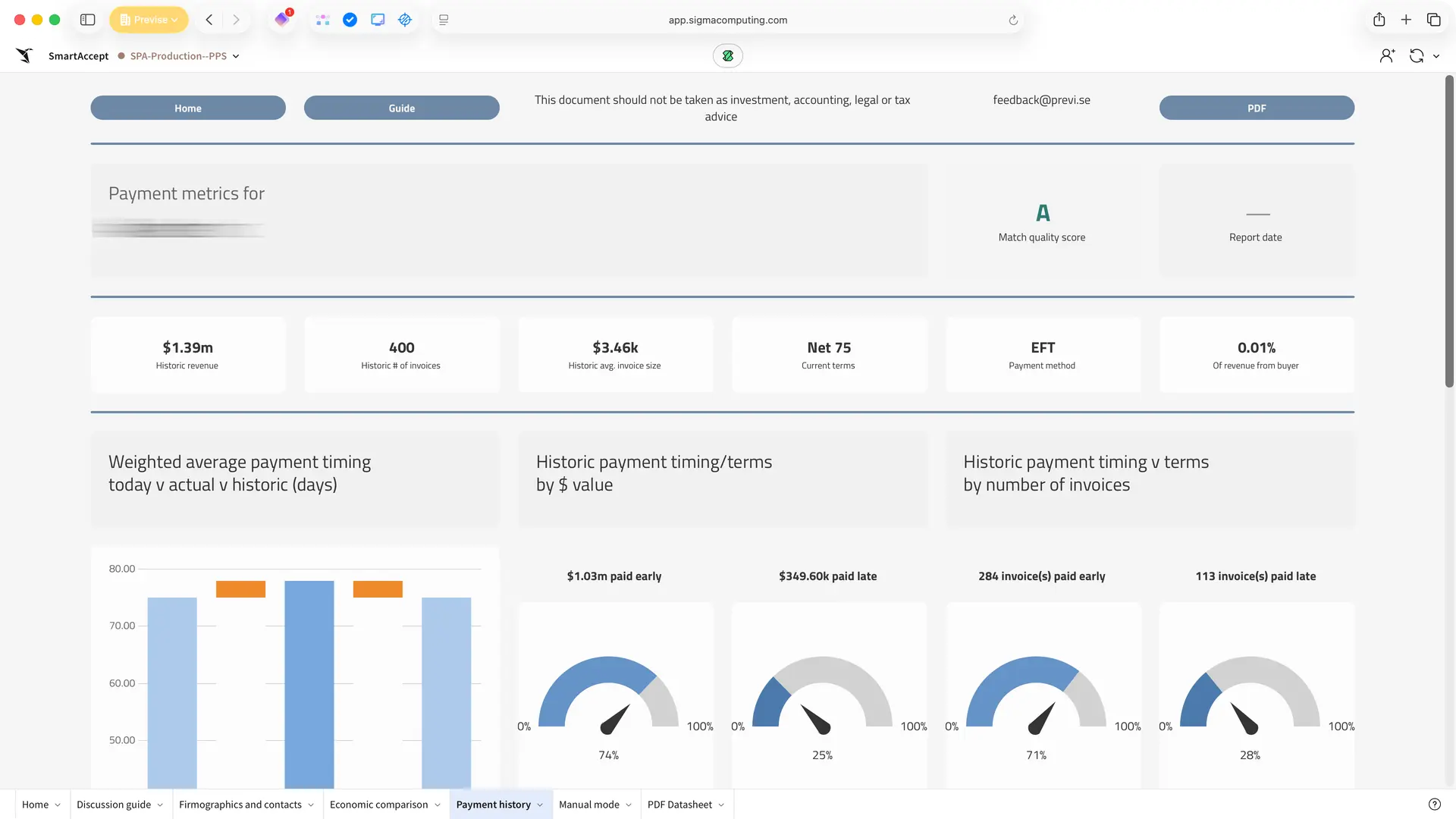
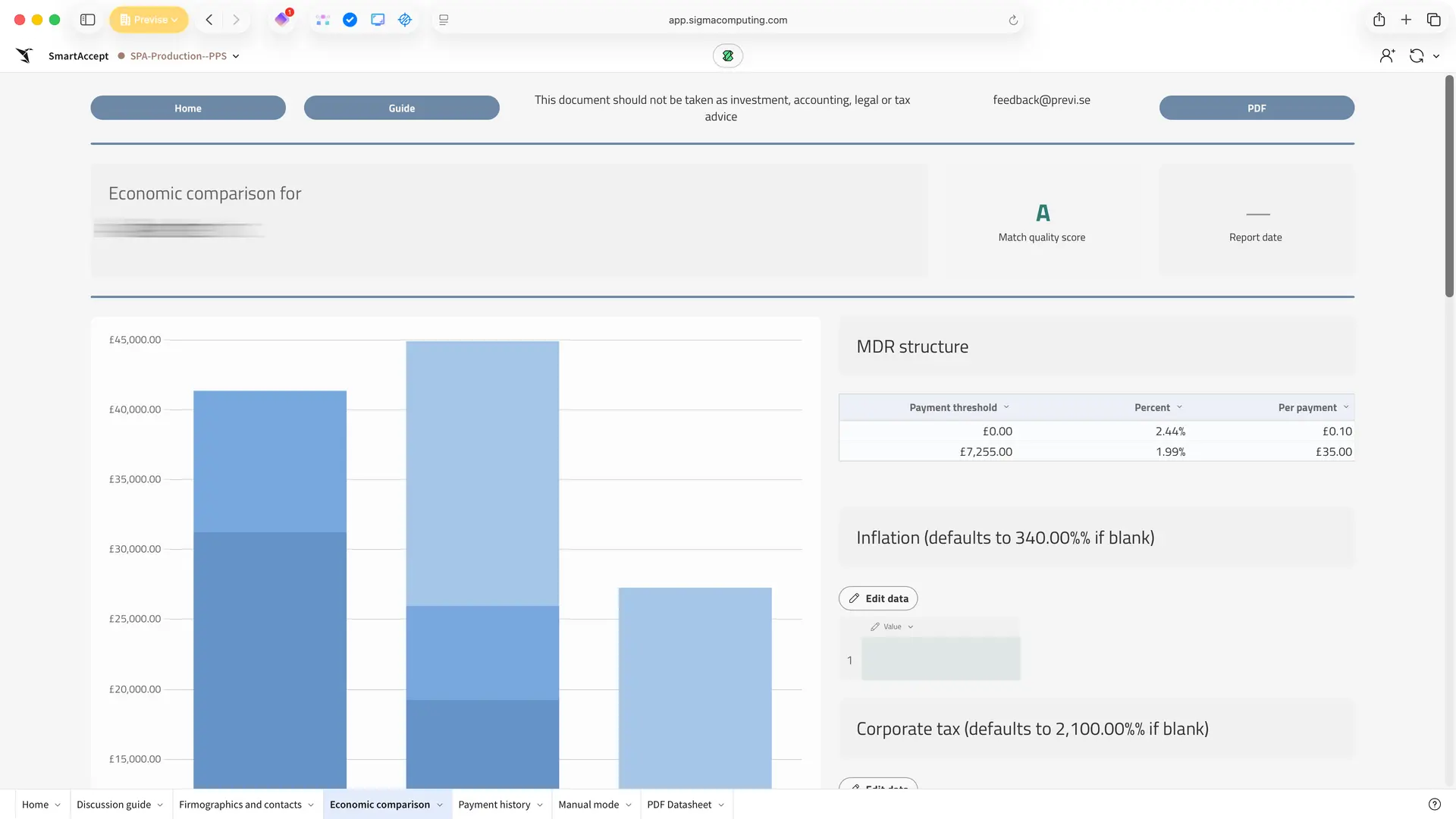
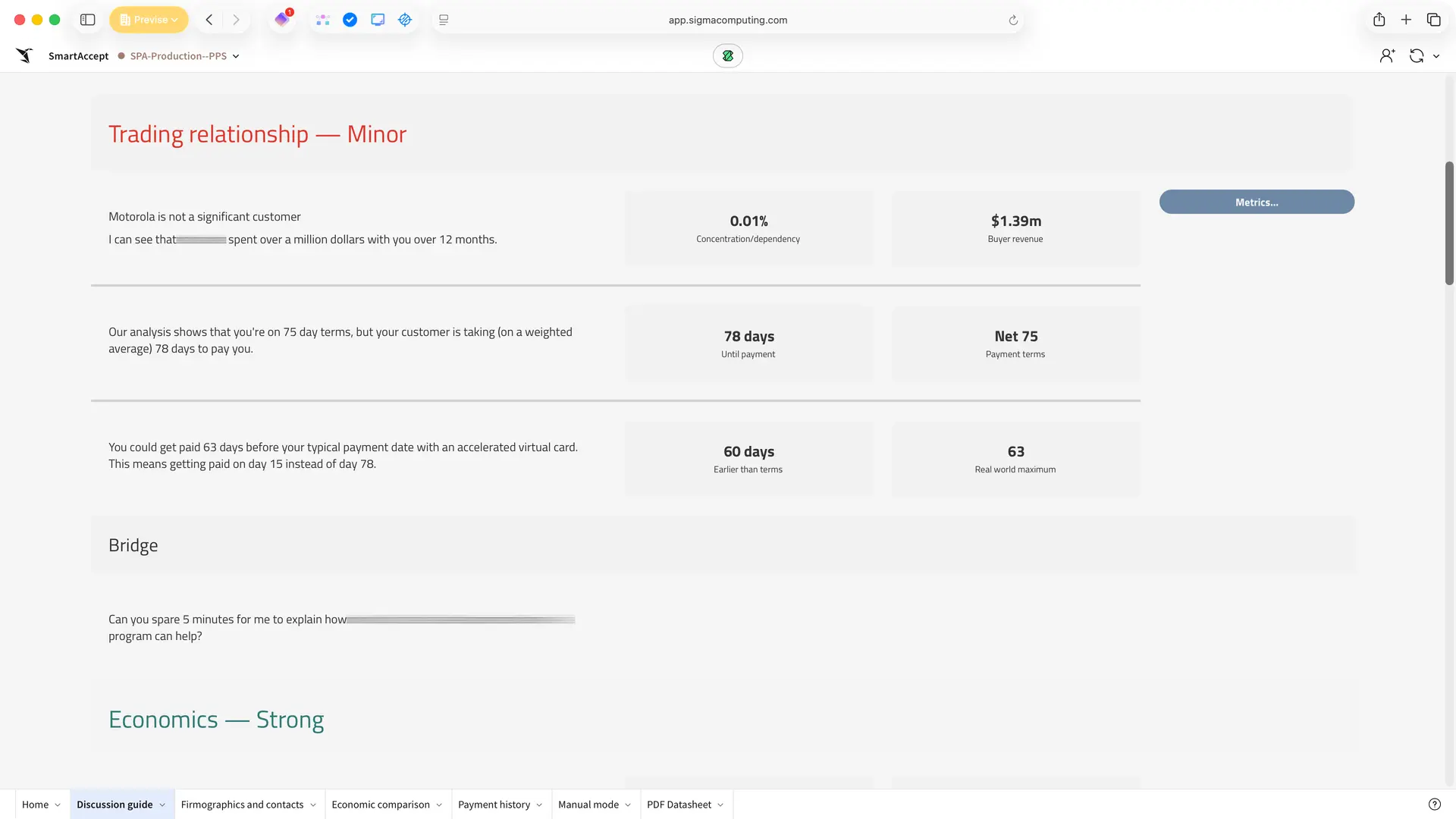
The initial builds assumed agents would screen-share with suppliers — walking them through comparison charts and following scripted talking points that explained concepts like weighted average cost of capital. The UI included dense explanatory text, economic comparisons, and structured narrative blocks designed to guide the conversation from introduction through to close.

2

What we learned

Agents weren’t on Zoom — they were on the phone. You can’t explain a stacked bar chart verbally, and customers don’t wait for you to finish reading a script. They ask questions, go off-piste, want specific numbers. The scripted approach assumed a presentation; reality was a negotiation. Everything that followed came from accepting that distinction.

3

Company context at a glance

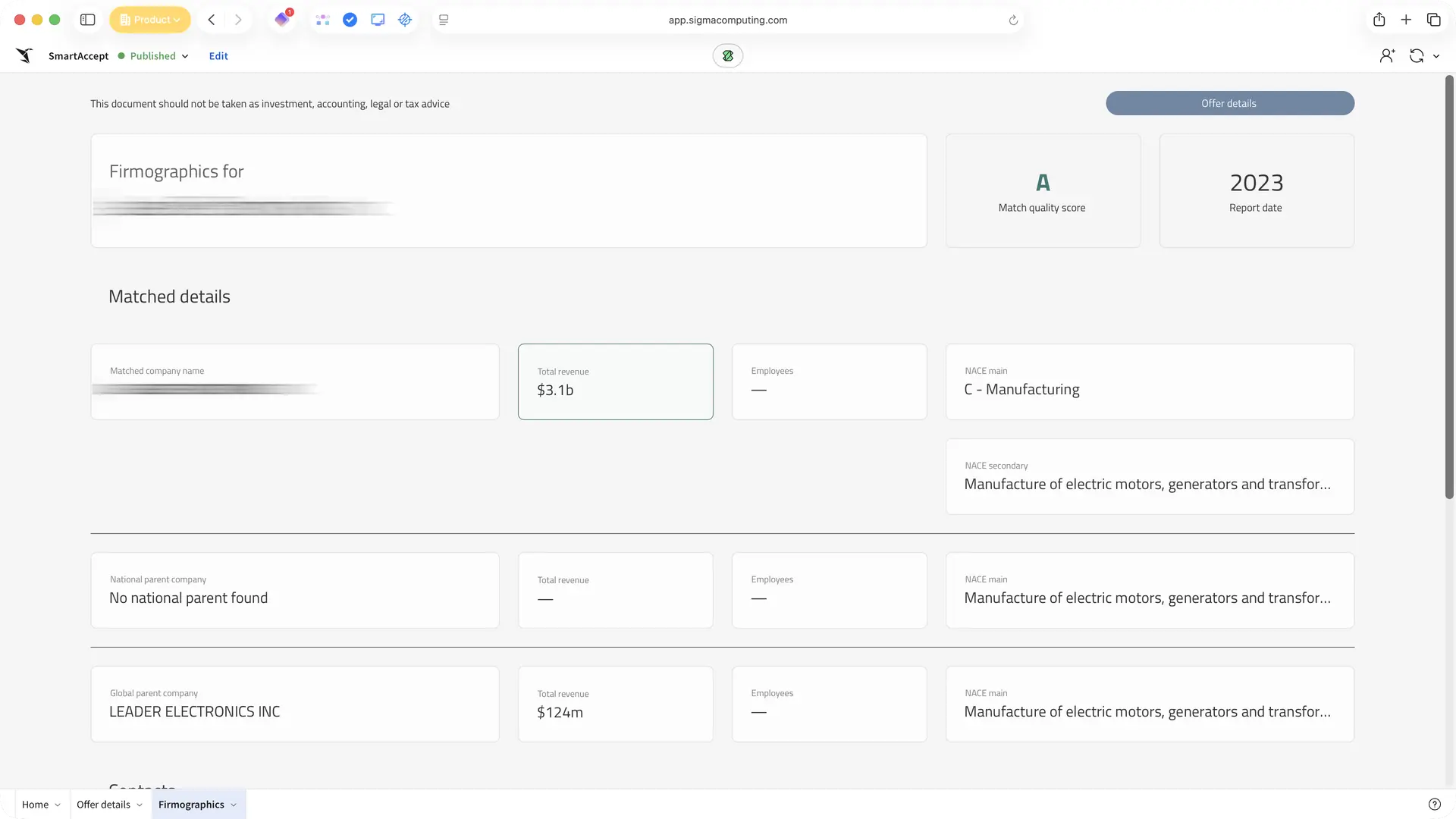
The Firmographics view pulls enriched company data — revenue, industry classification, corporate structure — so agents understand who they’re talking to before the call starts. Match quality scoring flags data confidence issues upfront, preventing awkward mid-conversation discoveries. The hierarchy view helps agents navigate complex supplier relationships without having to ask basic questions.

4

Offer details that support negotiation

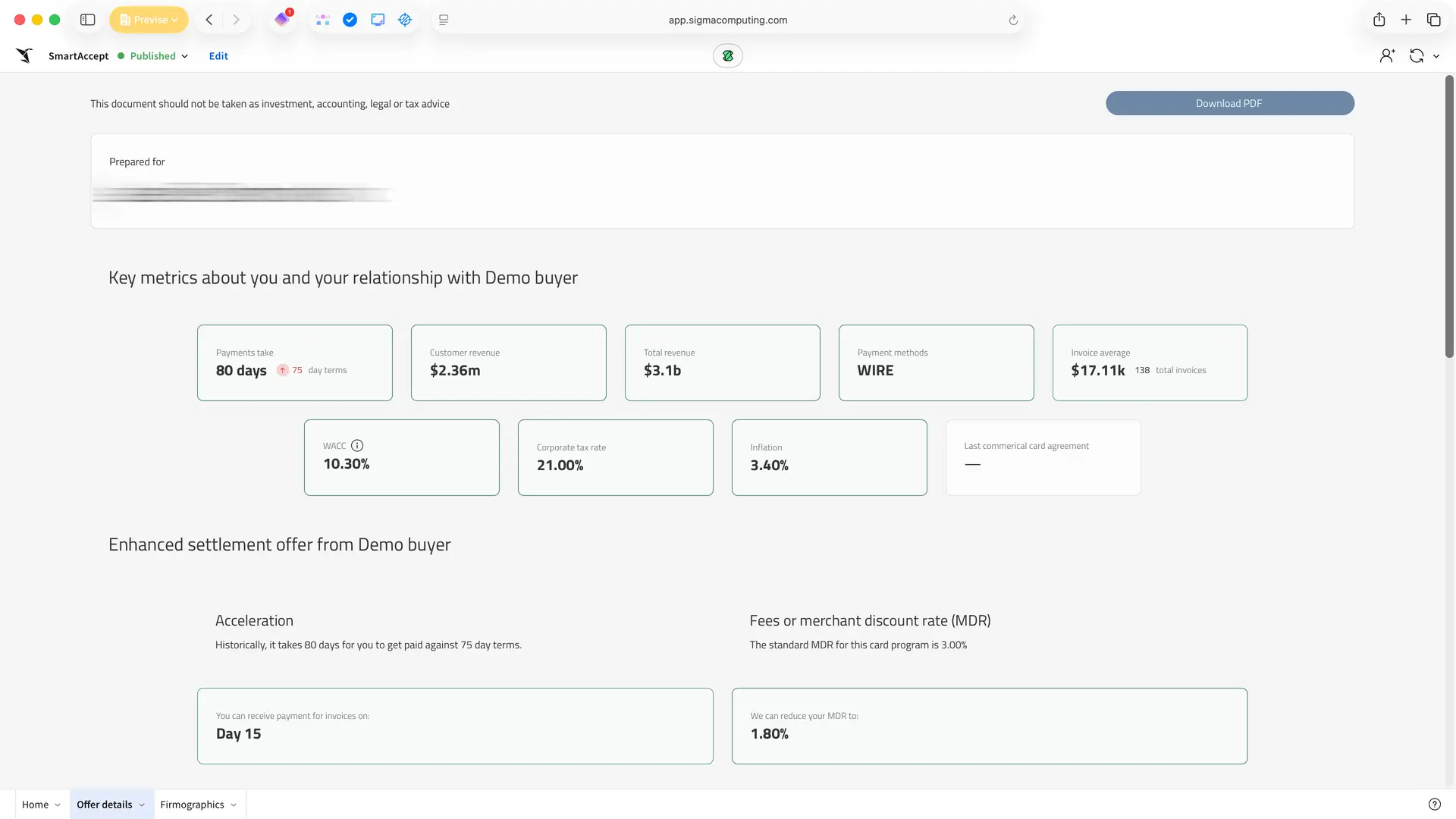
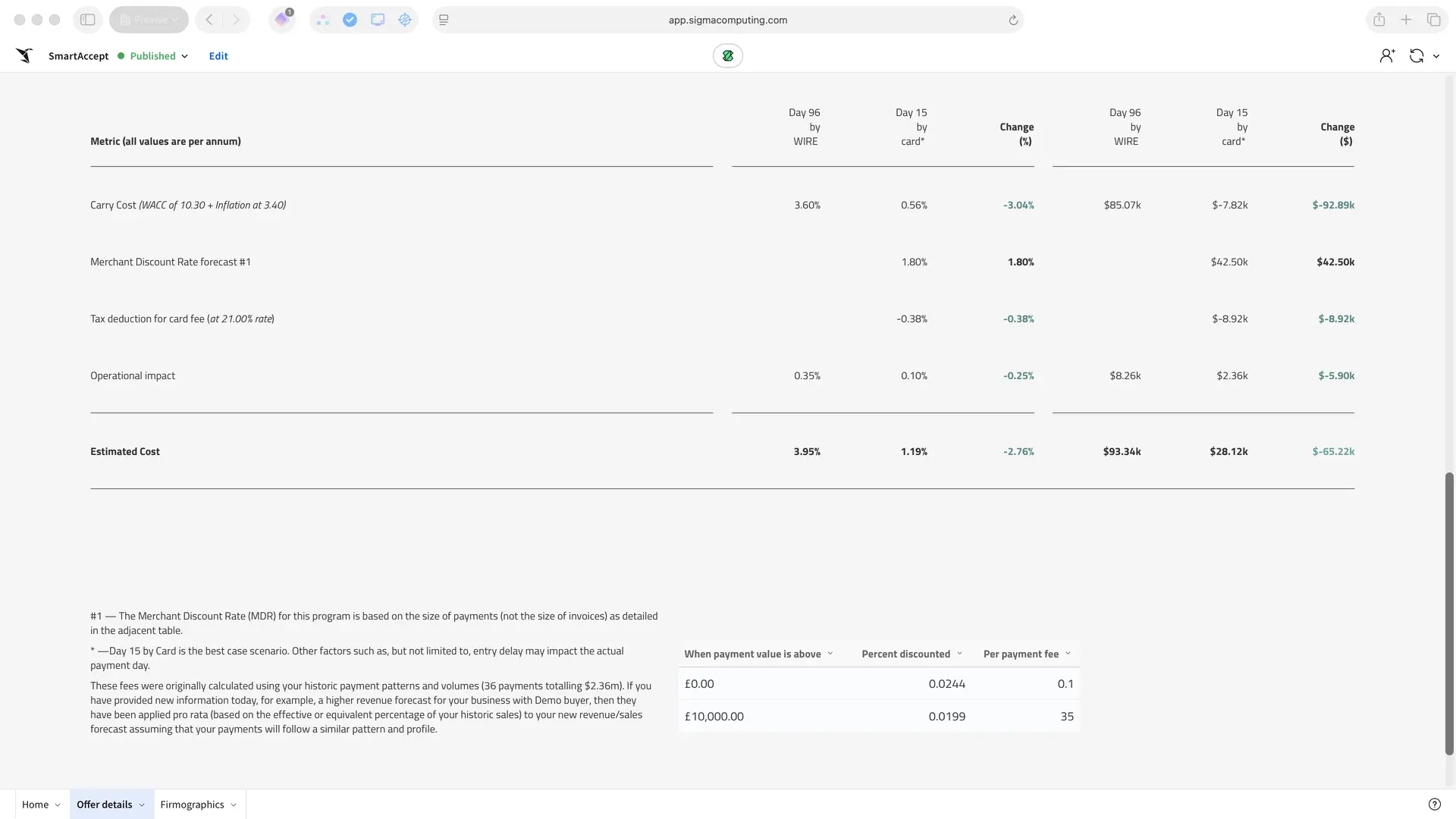
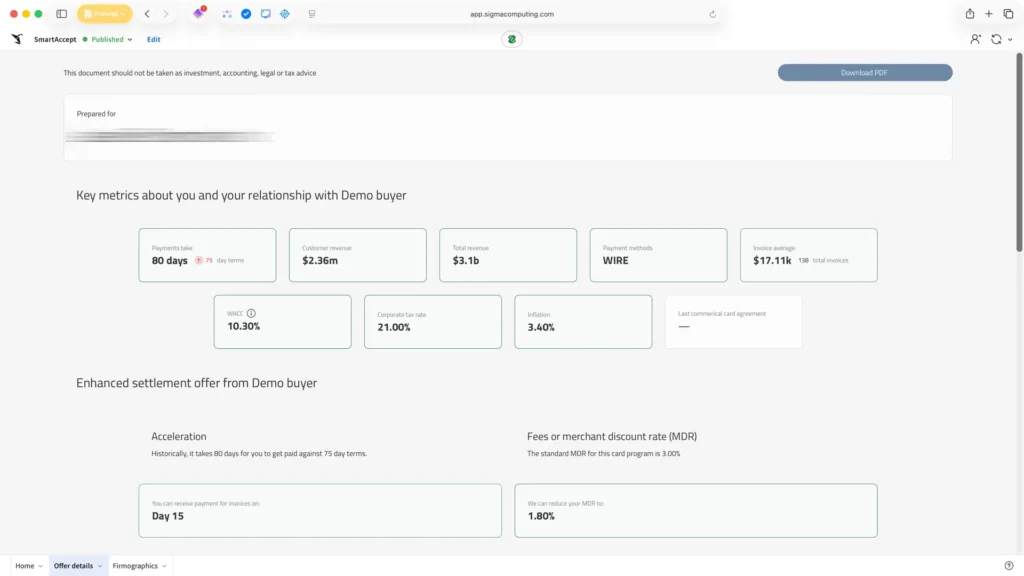
The core view surfaces the metrics that matter: current payment terms, historical behaviour, customer revenue, and the specific acceleration and fee reduction on offer. Cards present information in the order agents need it — relationship context first, then the commercial proposition. Numbers they can quote, not charts they have to interpret.

5

Editable parameters for real conversations

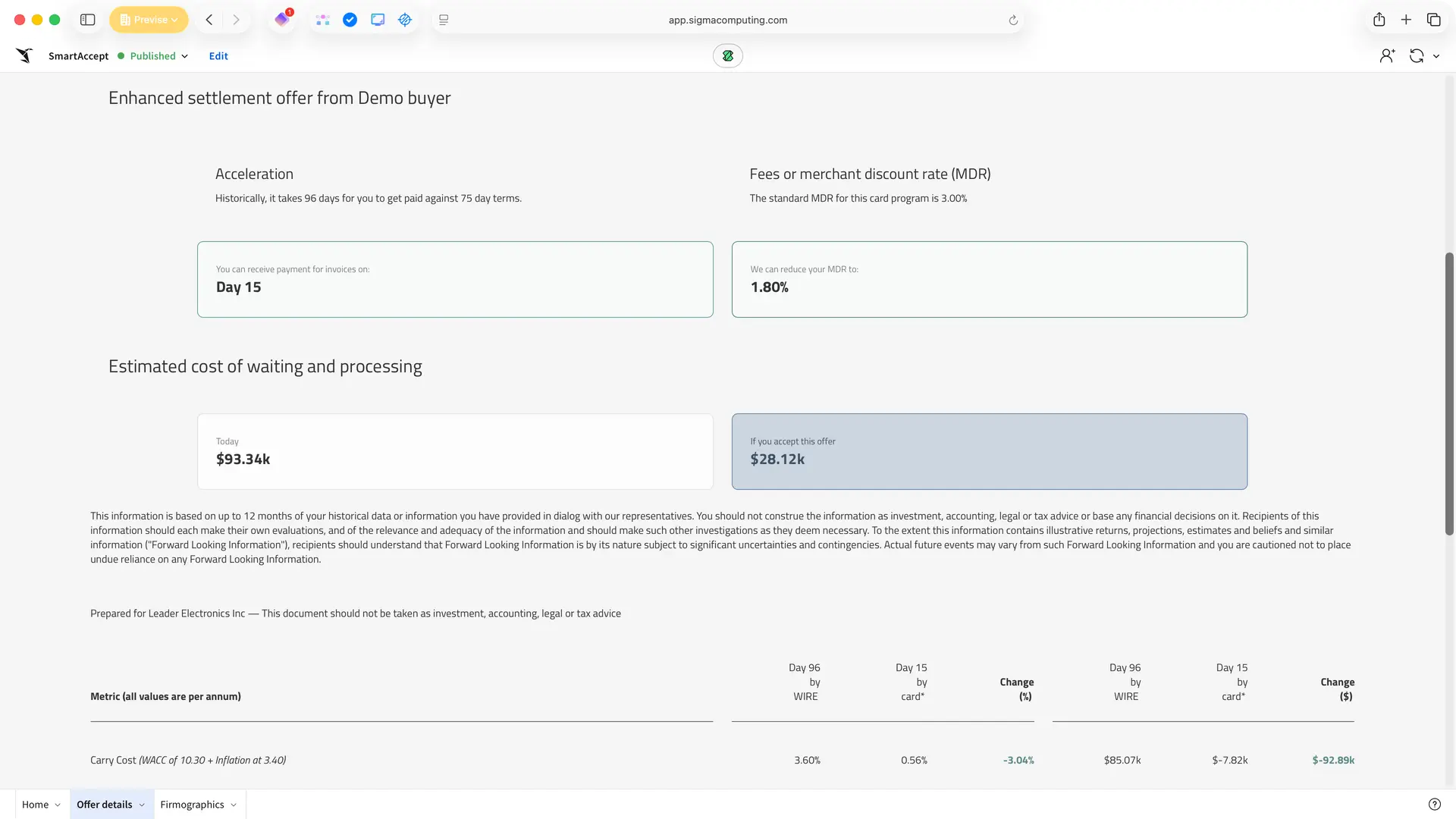
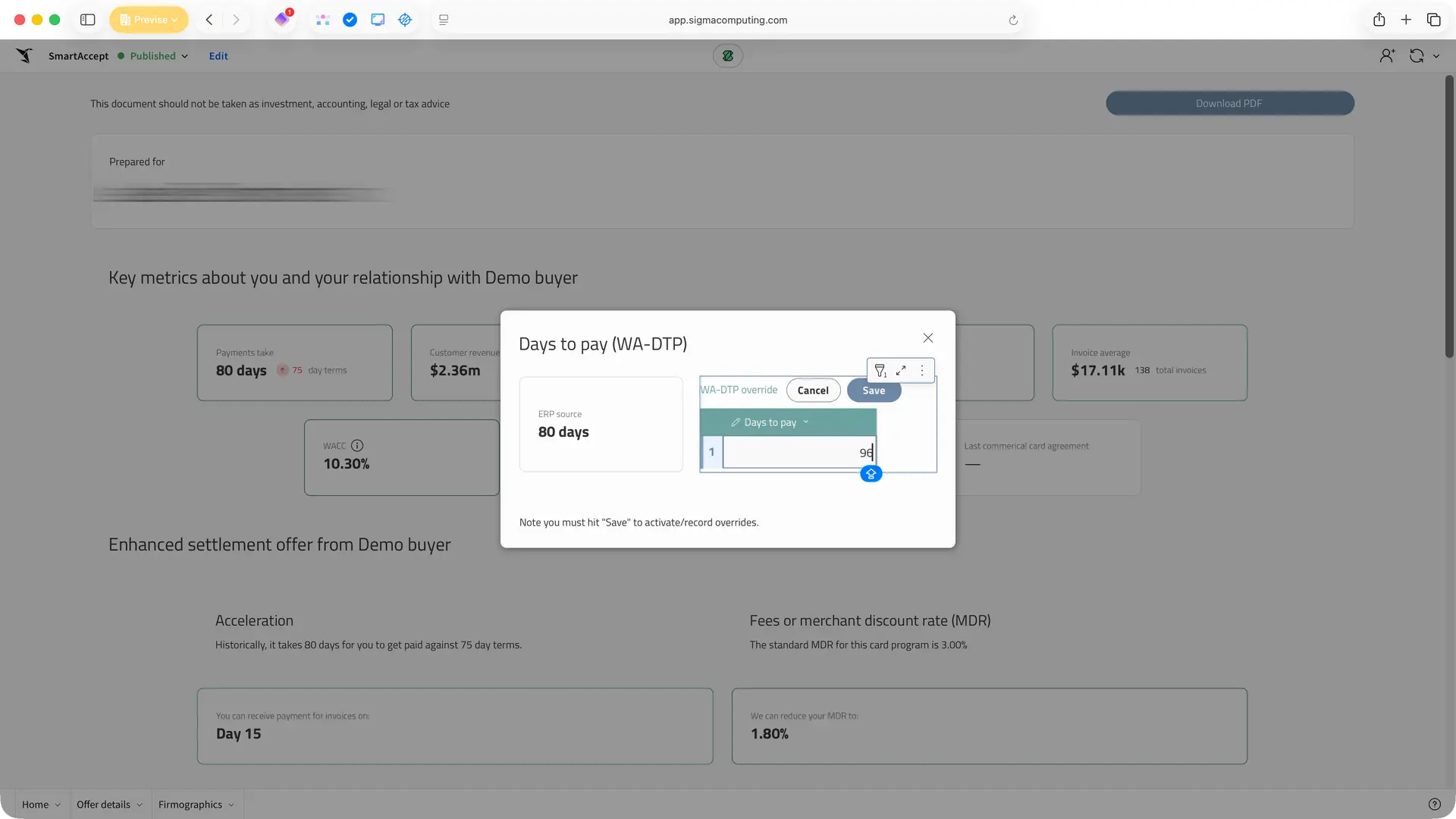
Suppliers don’t always match their data. The dashboard allows agents to override key inputs — like actual days-to-pay versus what the ERP says — and immediately see how that changes the offer. Building persistent overrides in Sigma (rather than throwaway form fields) was technically challenging, but essential for agents returning to the same supplier across multiple conversations.

6

The engine underneath

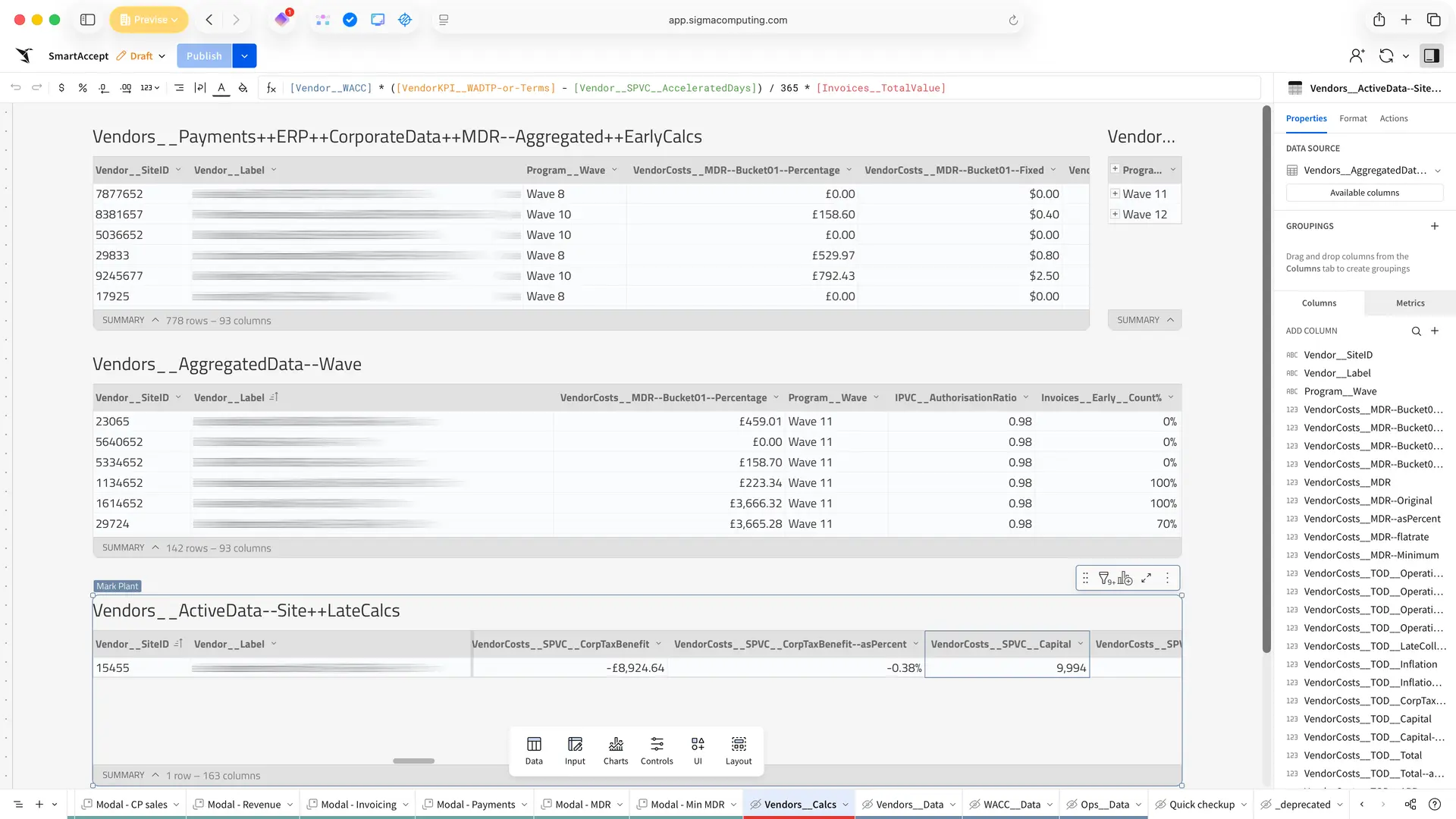
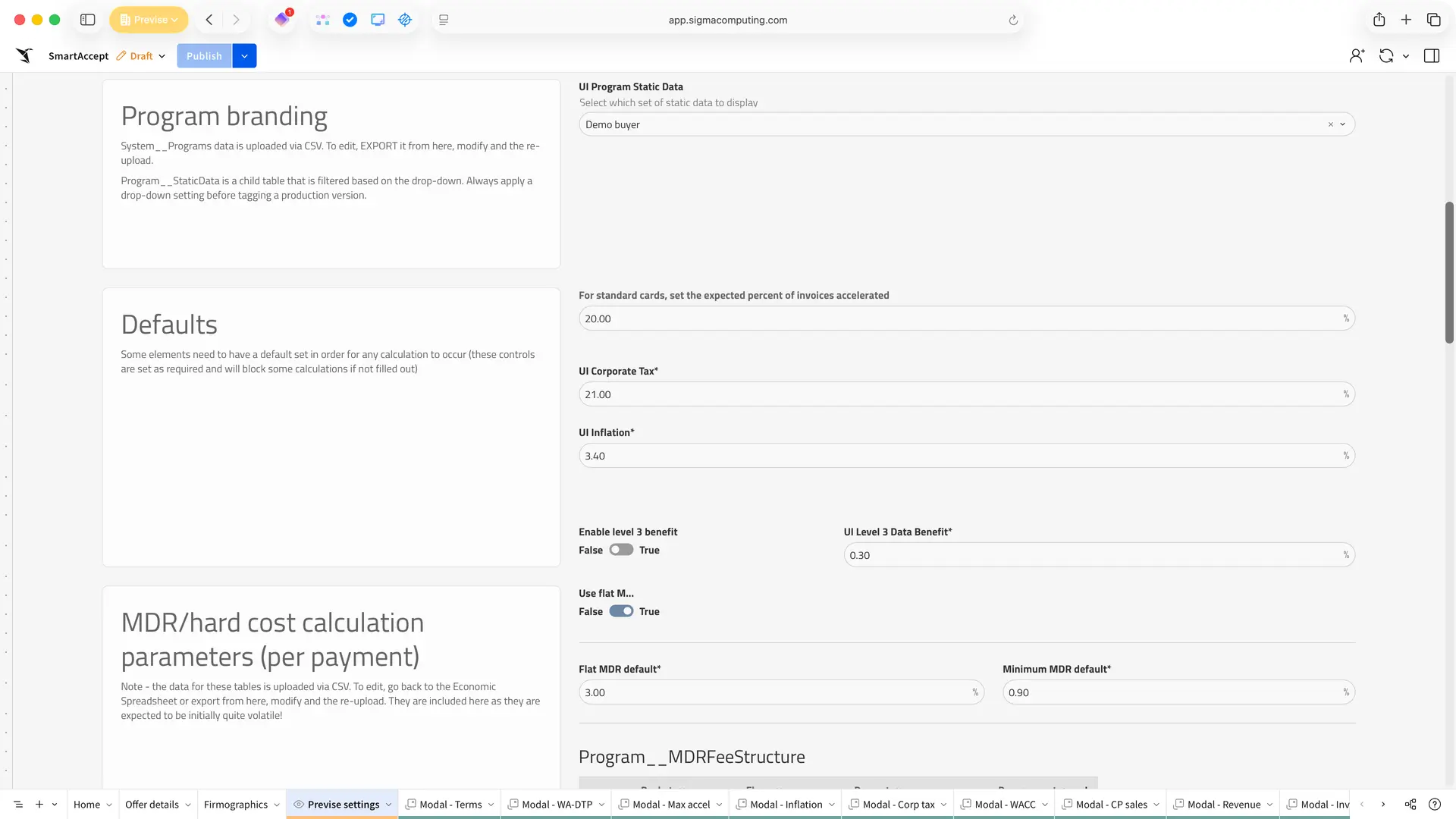
The polished front-end is only half the story. Behind it sits a calculation engine handling merchant discount rates, cost of capital, payment acceleration benefits, and programme-specific fee structures. The settings layer allows programme administrators to adjust defaults — tax rates, fee structures, calculation parameters — without touching the underlying logic.

This project reinforced something I’ve learned repeatedly: the first solution stakeholders ask for is rarely the right one. Early versions assumed agents would screen-share on Zoom calls and walk suppliers through charts and scripts. Reality was phone calls, impatient customers, and questions that don’t follow a script. The version that worked was simpler, faster, and more useful — because we kept returning to how agents actually work.

How we work

Fixed-scope projects for specific problems such as a UX audit, brand refresh, or product sprint.

Fractional engagement for ongoing senior design thinking without full-time commitment and costs.

We diagnose what's broken, deliver working solutions, and can mentor junior team members.

Take the first step today